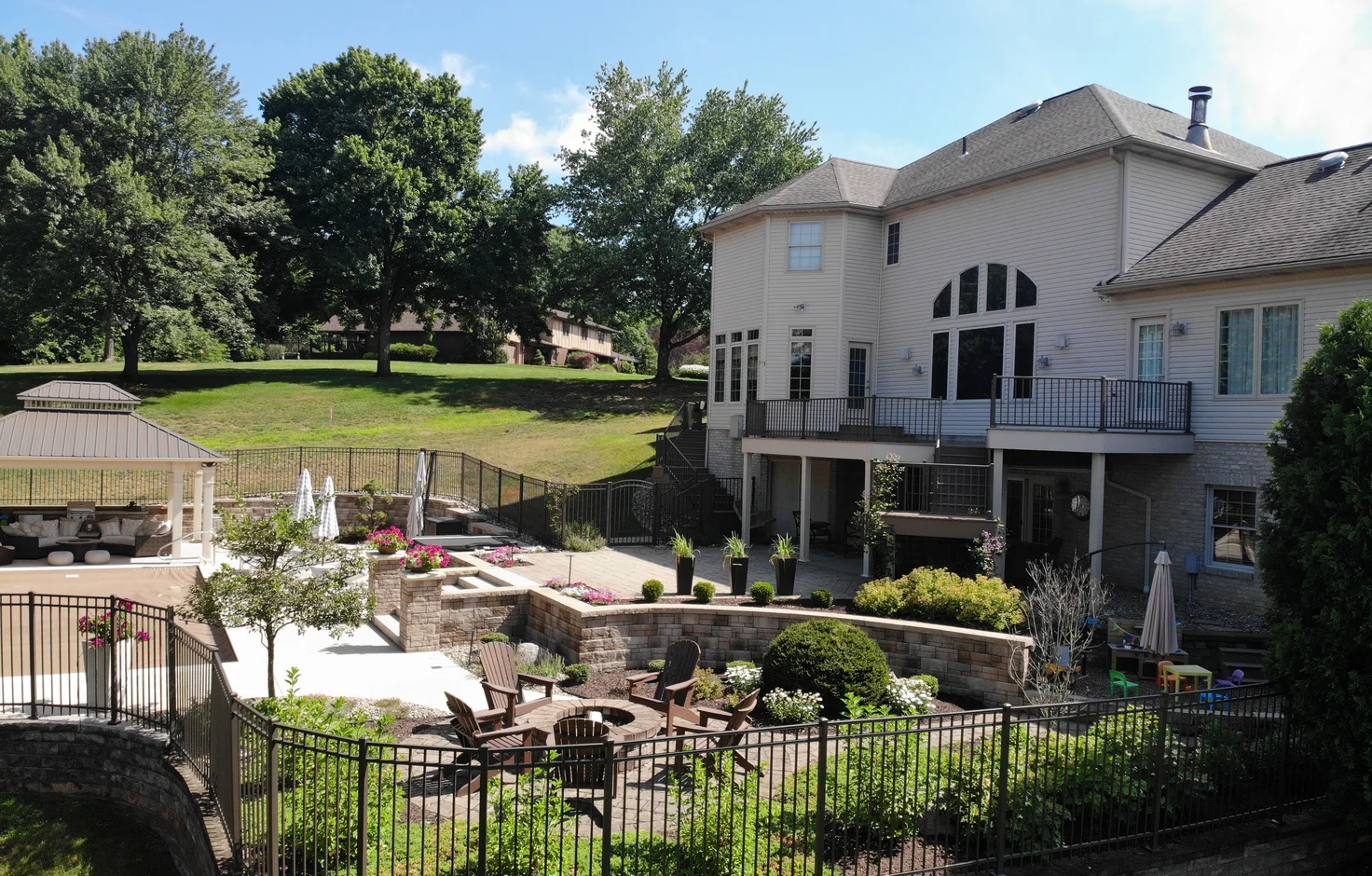
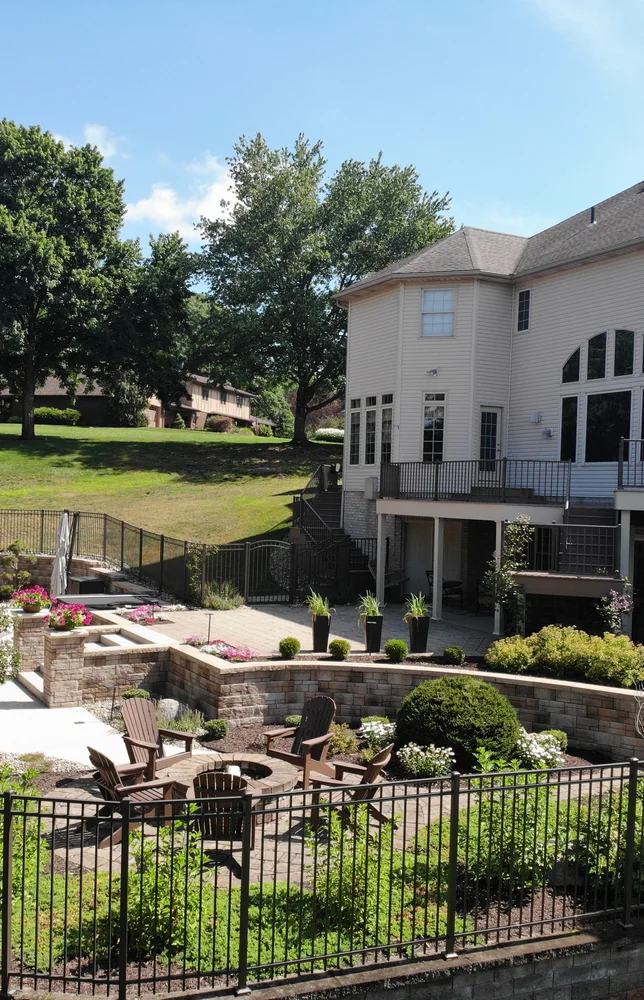
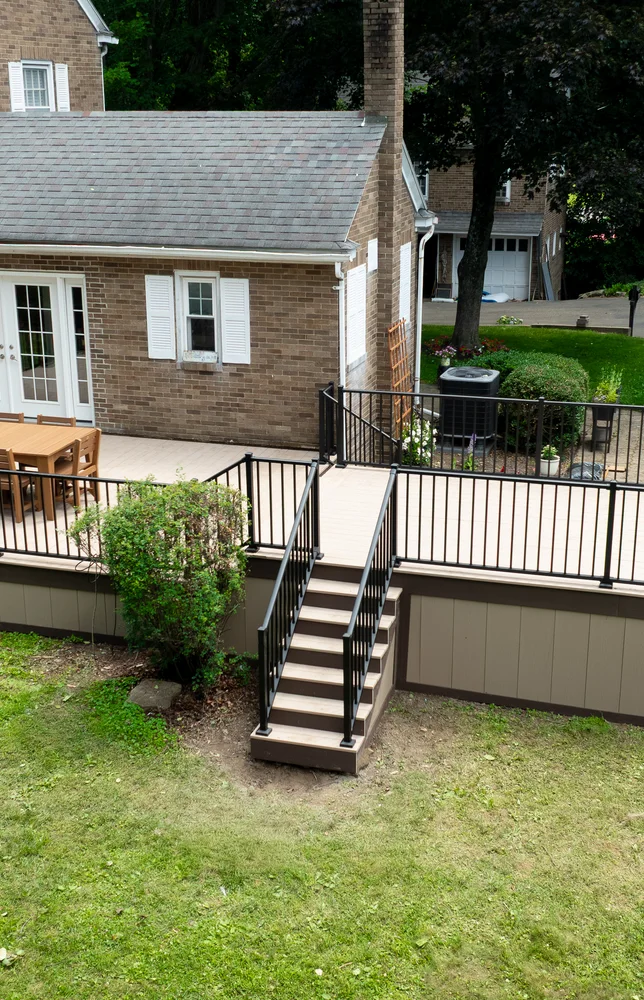
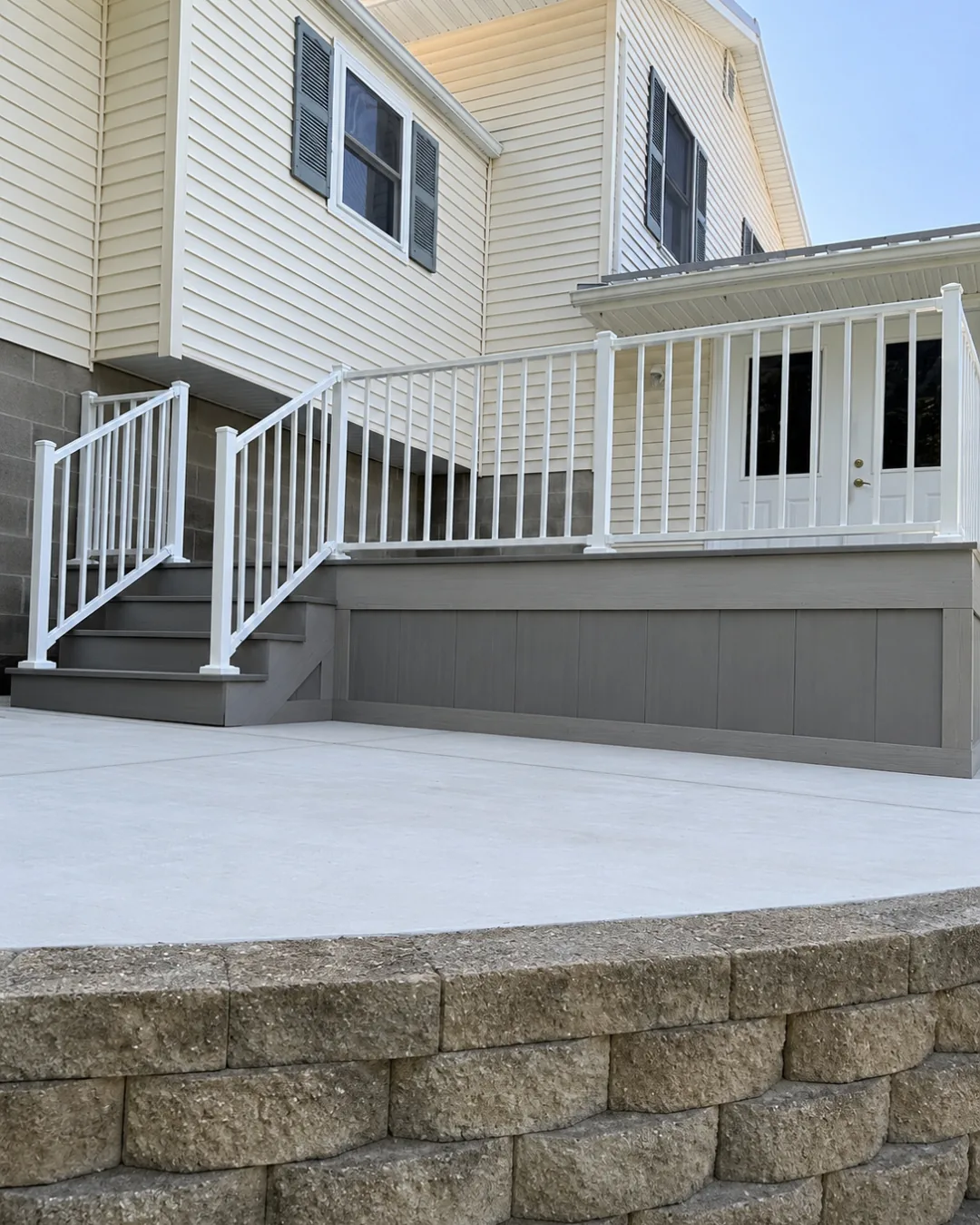
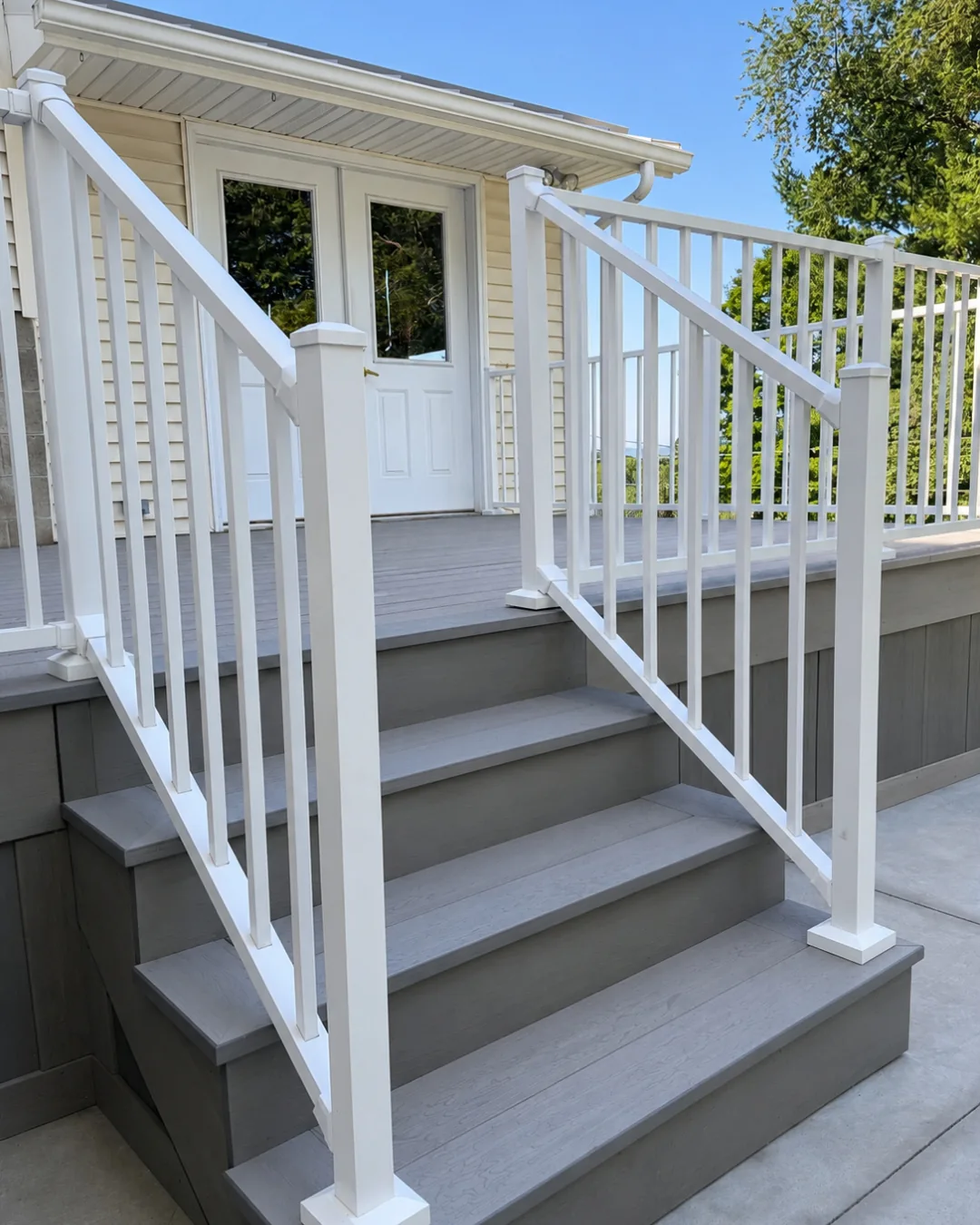
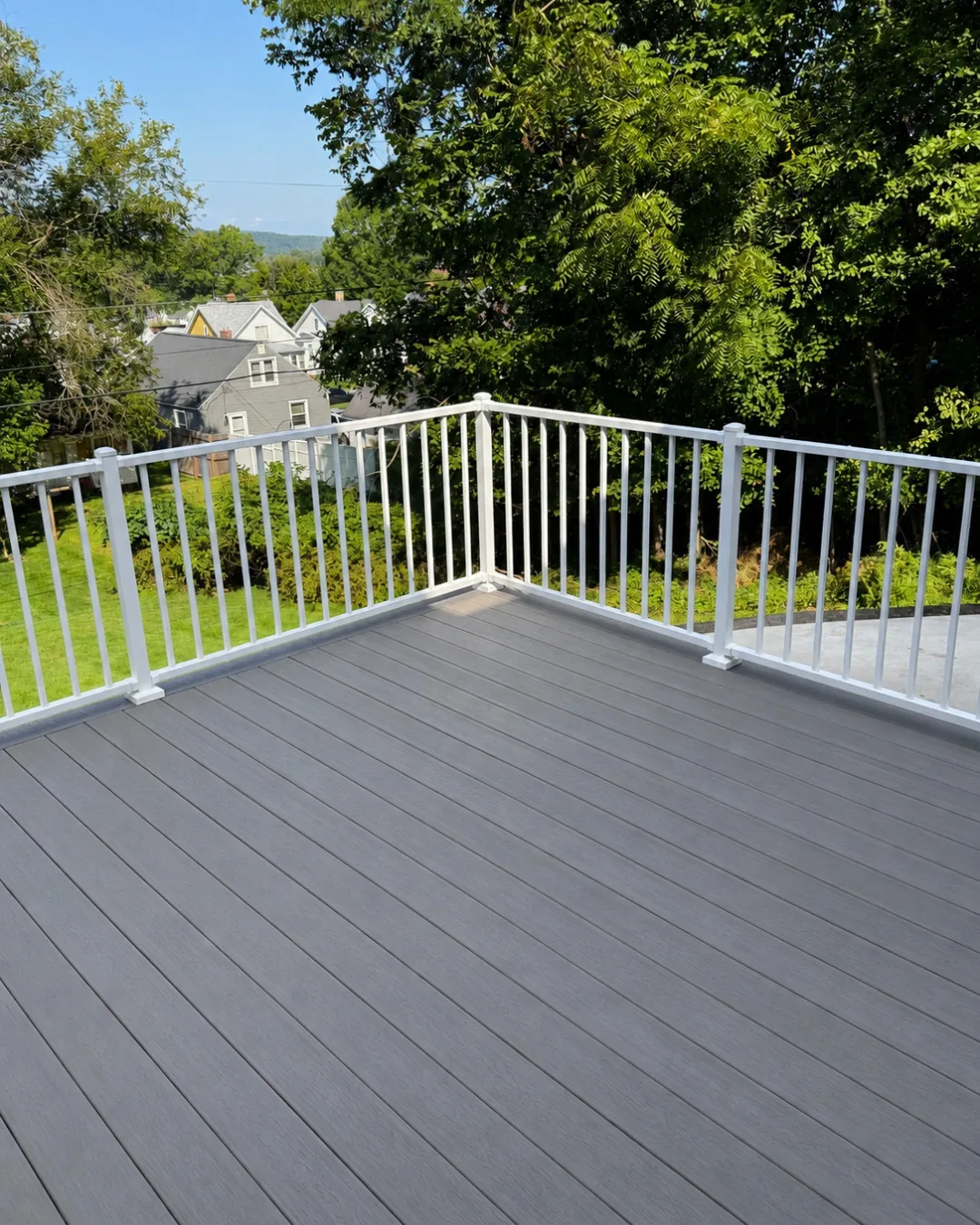
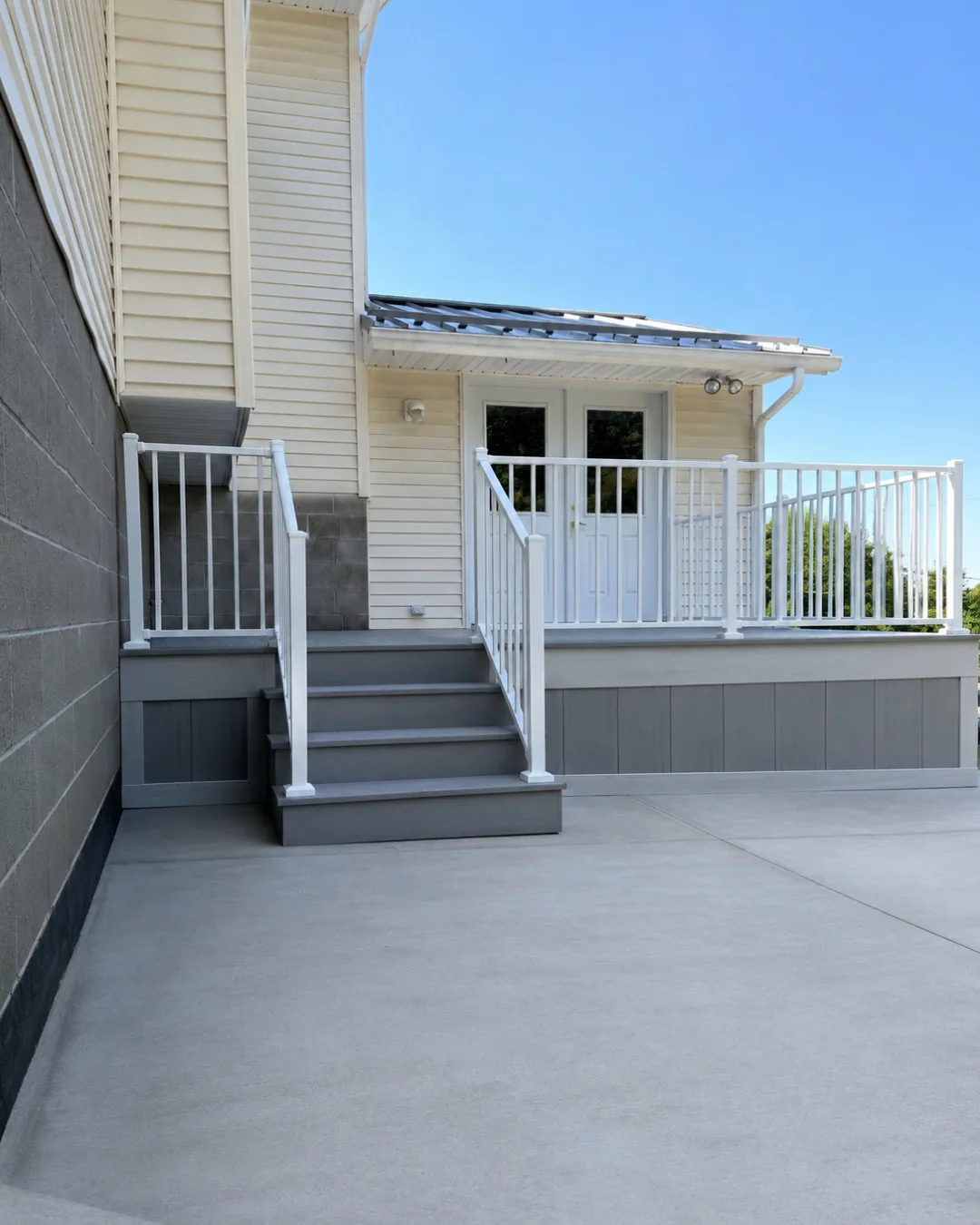
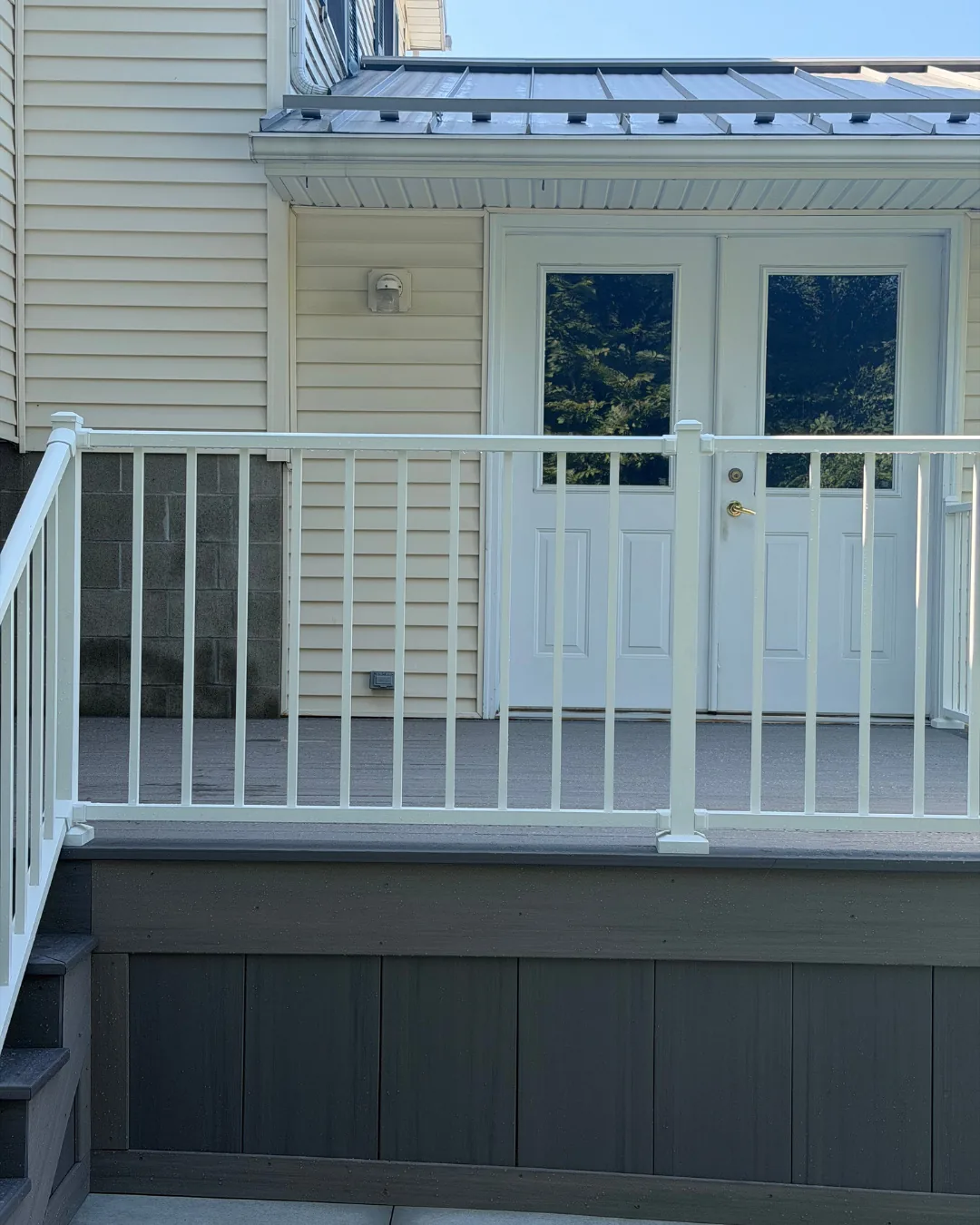
Both are low-maintenance and both beat wood — but if you want the best-performing deck money can buy, advanced PVC is the one we point most homeowners toward.
Composite decking is a blend of recycled wood fibers and polymers, sealed with a protective cap. That wood content gives it a warm, textured look and typically lasts 25–30 years. It's a solid, proven choice — and for a lot of budgets, a smart one.
Advanced PVC decking takes it further. It contains no wood at all — it's 100% engineered polymer — and that single difference is what puts it in a class of its own. With no organic material to absorb water, there's simply less that can ever go wrong:
- It outlasts composite by decades — 50+ years of life versus 25–30. Build once, enjoy it for a generation.
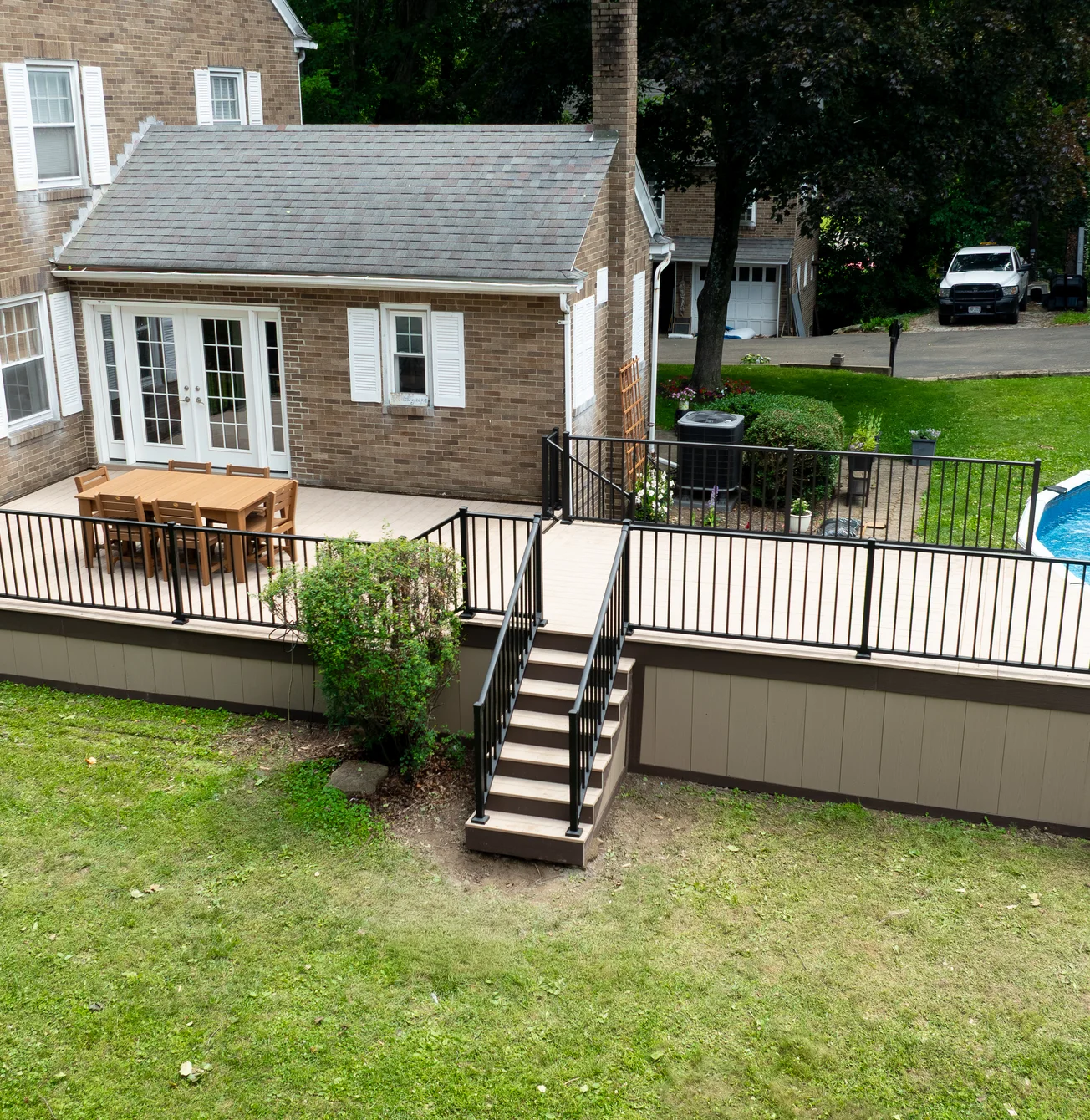
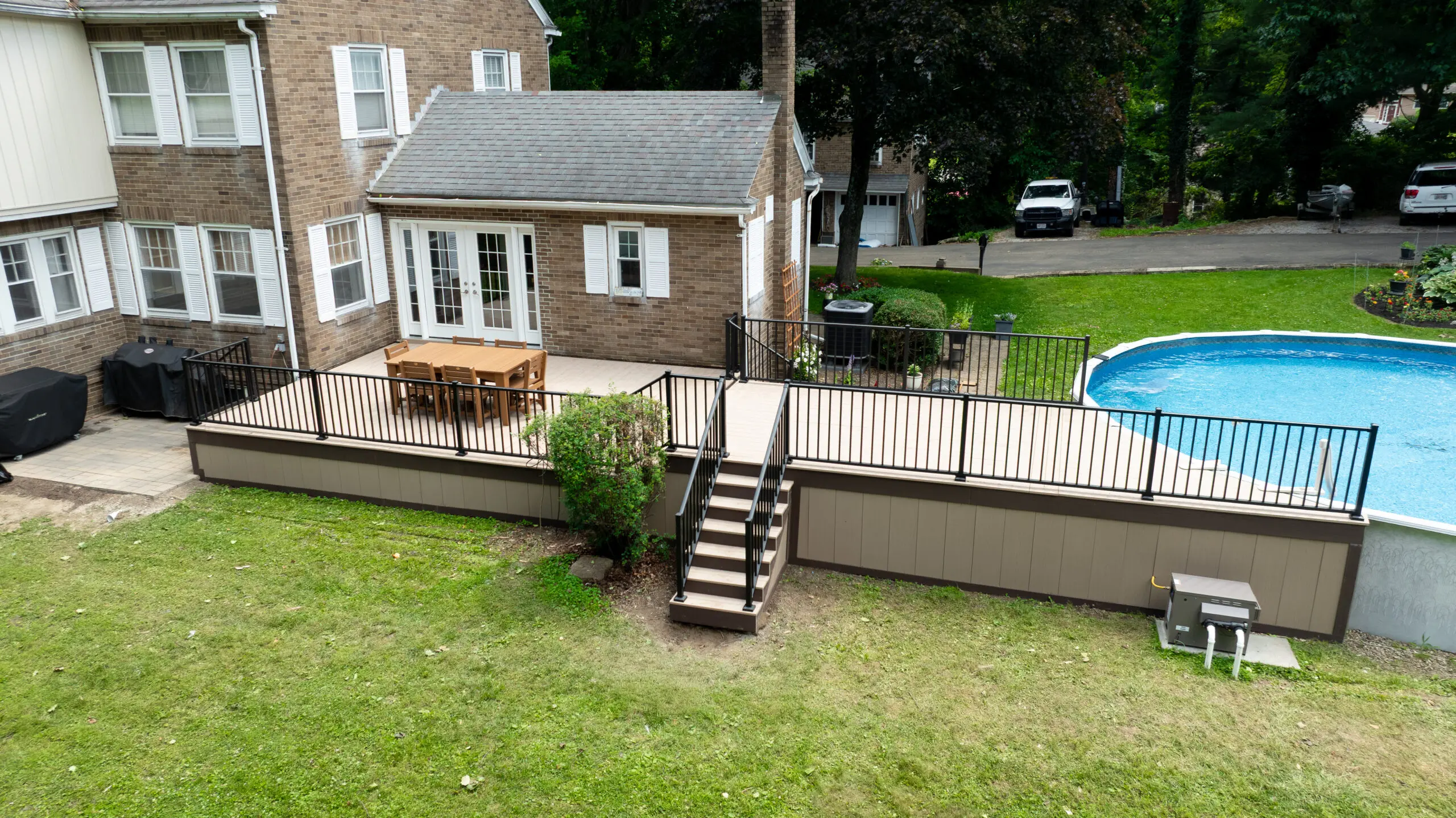
- It shrugs off water completely — won't absorb moisture, crack, split, rot, or peel, which makes it the clear winner for poolside, high-humidity, and waterfront decks.
It stays cooler and safer underfoot — engineered to reflect heat and hold traction whether it's wet or dry, so bare feet and pool days aren't a problem.
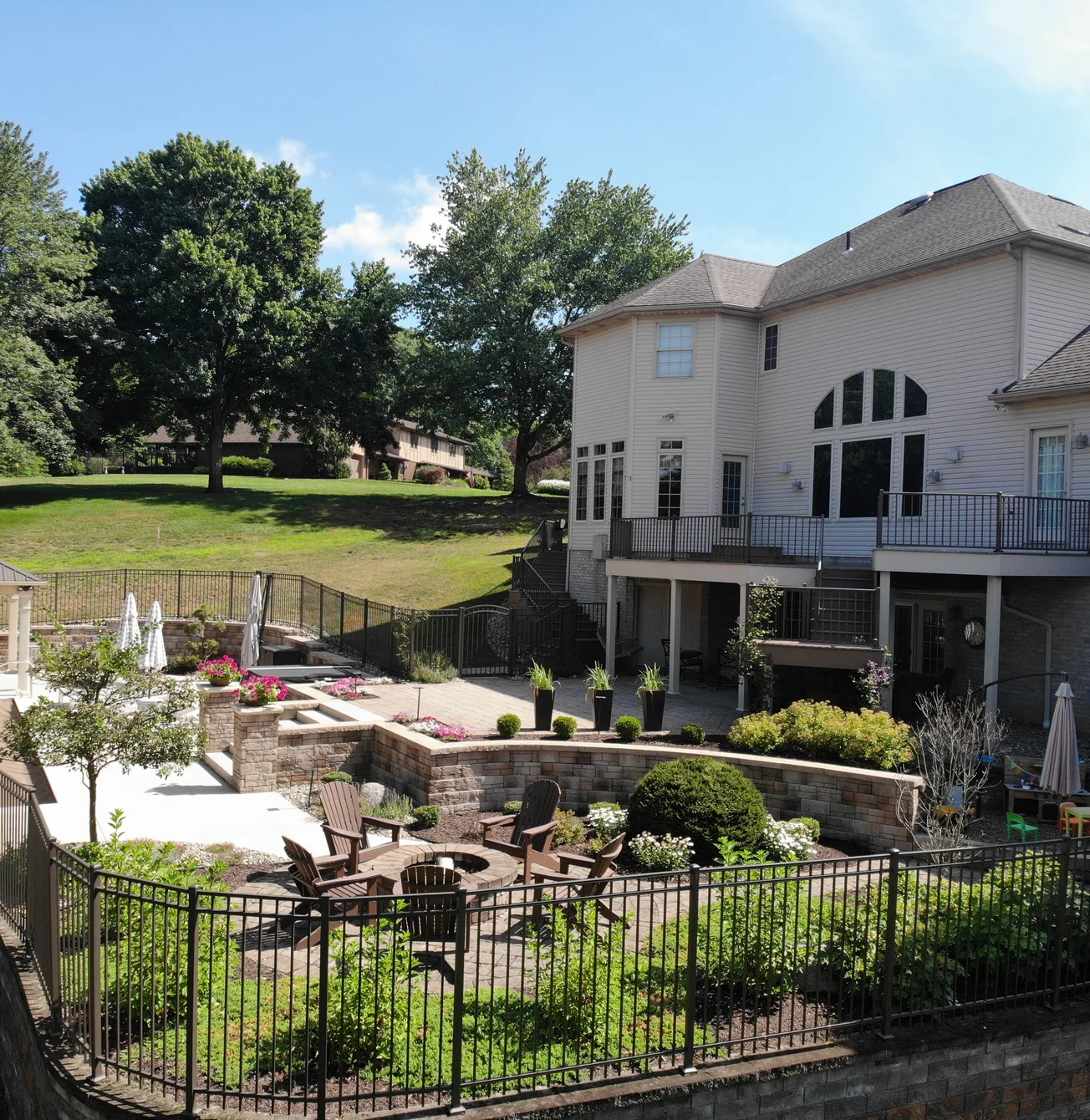
It unlocks better craftsmanship and custom designs. Because advanced PVC is lighter and easier to work, it lets our crews nail the finer details and build things composite simply can't handle as cleanly — curves, multi-level layouts, picture-frame borders, and fully custom designs. If you can dream it, PVC gives us the freedom to build it.
Here's the honest math: advanced PVC costs a bit more up front, and it earns it back in decades of extra life and the lowest-maintenance surface available. When you spread the price over how long it lasts, it's often the better value — not just the better deck.
That's why, when a homeowner asks us what we'd put on our own house, the answer is usually advanced PVC. But you're not choosing blind — we carry both, and we'll help you land on the right fit for your space and your budget.
Ready to build a deck that outlasts the mortgage? Talk to our team.